Key takeaways
- Plan around the confirmed group and a real finish time.
- Read the rules before guests arrive.
- Let a good evening end without forcing another game.
Set expectations before people arrive
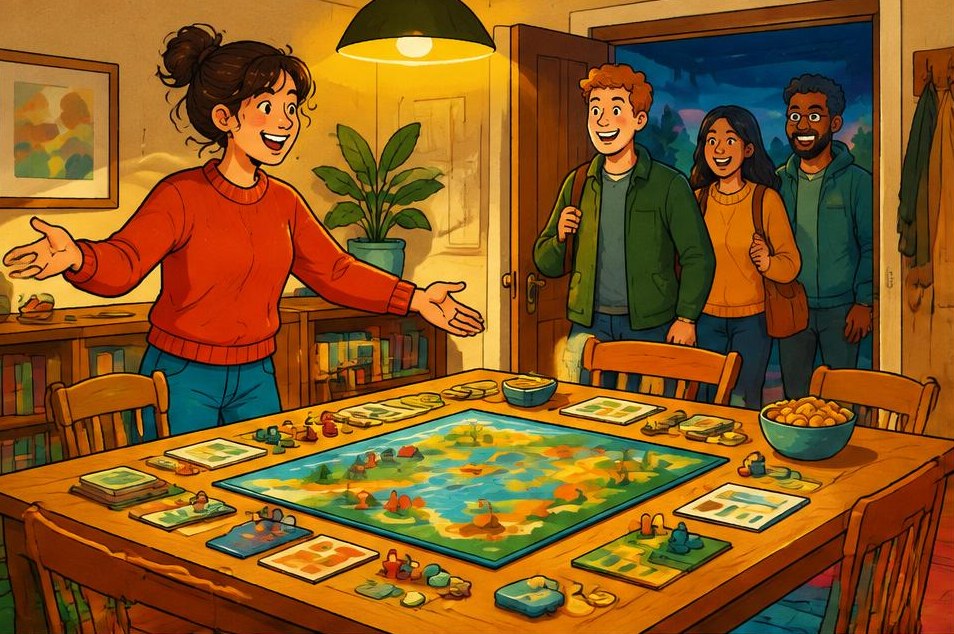
A game night invitation should make the evening easy to say yes to. Tell guests when it starts and ends, whether you have a game in mind and whether beginners are welcome. If the main game involves a long teach or an intense competitive format, say so rather than surprising someone who expected casual conversation.
Confirm your head count close to the evening. A game that needs five people can leave you improvising if two cancel. Prepare a backup for your likely minimum attendance, and avoid treating an unexpected guest as a problem to solve with a box that technically stretches to one more player.
Prepare the table, not an elaborate performance
Read the rules in advance, separate components and check that your table has room. Consider lighting, seating and whether everyone can reach shared pieces. Put drinks where a spill is less likely to end the evening, and keep snacks easy to handle between turns.
Select one main game and a lighter alternative. Too many options can turn the first half hour into shopping rather than playing. Give guests a small, meaningful choice: ‘Would you rather solve something together or compete?’ That tells you more than asking everyone to inspect a stack of unfamiliar boxes.
Find your next table favorite
Good company. The right game. A night worth repeating.
Find a gameUse a schedule with breathing room
This two-hour example is a planning suggestion, not a rule about how long game nights must last. Advertised playtime may exclude teaching, setup and cleanup, so keep a buffer—especially for a first play.
| Stage | Time set aside | Purpose |
|---|---|---|
| Arrive and settle | 15 minutes | Conversation and choosing the mood |
| Teach and practice | 15 minutes | Goal, sample turn and questions |
| Main game | 60 minutes | One complete experience |
| Optional short game | 20 minutes | Only if the group wants more |
| Wrap up | 10 minutes | Cleanup and next-time feedback |
Teach the goal before every exception
Start with what players are trying to accomplish. Show the main actions and demonstrate a turn, then explain how the game ends. Introduce edge cases when they become relevant, unless knowing them early is necessary for a fair decision.
Do not use a newcomer's mistake as a public test of whether they listened. Offer a reminder, answer questions and agree on whether take-backs are allowed for the learning session. A clear explanation helps; a welcoming response to confusion is just as important.
Finish while people still want another night
After a game, ask whether people want a short second session, a chat or an early finish. Avoid interpreting a polite ‘maybe’ as permission to set up your longest game. Ending on time helps guests trust the next invitation.
Record what worked: actual head count, elapsed time, reading difficulties and the moment people became most engaged. Those notes create a useful buying brief for your next game. In Meeple Matters, use player count, complexity and game length to explore candidates, then verify any firm requirements in the rules.
Frequently asked questions
How many games should I plan for one evening?
Prepare one main game and one backup. Play more only if time and enthusiasm allow; completing one good game is enough.
What if a guest has never played modern board games?
Choose an accessible teach, explain the goal first and allow questions without embarrassment. Avoid assuming a long strategy game is the best introduction.
Sources & further reading
Source notes identify the facts each reference supports. Buying frameworks, schedules and price examples are editorial guidance, not research findings or current offers.
- Community source: Weight
Primary reference for the 1–5 community complexity scale and its limitations.
- Community source: Board Game Gift Guide
Community examples organized by audience; historical prices and availability are not used here.
About this guide
Published by Meeple Matters, a board game discovery site. These AI-assisted guides synthesize publisher specifications, community scoring documentation and practical buying considerations. They are not hands-on reviews, original research or claims of professional testing. No individual reviewer credentials are implied.
Our current discovery catalog is limited, and store prices and Amazon ratings are estimates until verified data sources are connected. Check current specifications, stock and prices with the publisher and retailer. As an Amazon Associate, Meeple Matters earns from qualifying purchases through its shopping links.
Find your next table favorite
Good company. The right game. A night worth repeating.
Find a game