Key takeaways
- The youngest player's needs are a starting point, not the whole decision.
- Short turns and readable components matter as much as theme.
- Cooperative play still needs room for every person's decisions.
An age label is only a starting point
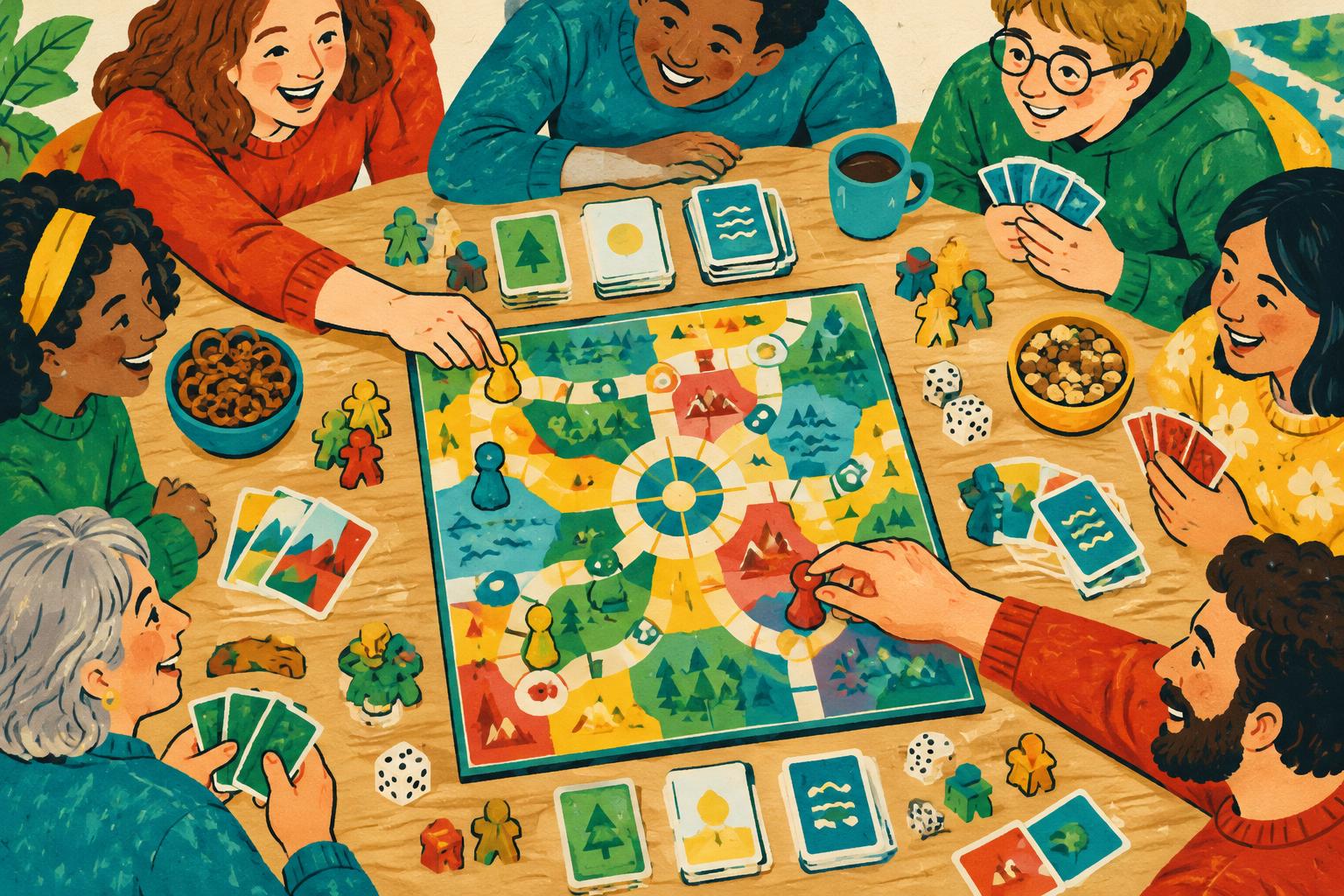
A publisher's recommended age is useful, but it does not describe every child or adult at your table. Two players of the same age can differ in reading confidence, patience and comfort losing. Inspect the rules and components before assuming that a familiar cartoon or cheerful cover makes a game accessible.
Avoid buying only for the most enthusiastic gamer in the family. The aim is participation, not a demonstration of how much strategy someone can manage. A game that everyone asks to play again is doing its job, even if its rules are simple.
Find your next table favorite
Good company. The right game. A night worth repeating.
Find a gameTwo starting points, with different trade-offs
These are examples to investigate, not hands-on review winners. Gamewright describes Sushi Go! as a pick-and-pass card game for ages 8+, 2–5 players and around 15 minutes. It gives a family a compact way to explore choosing cards and collecting combinations.
Gamewright lists Forbidden Island for ages 10+, 2–4 players and around 30 minutes. Players work together to collect treasures and escape a sinking island. It is a different kind of evening: more shared discussion, but also a need to keep an experienced player from making every decision. Publisher times should not be treated as first-session guarantees.
| Game | Players / age | Listed time | Investigate before buying |
|---|---|---|---|
| Sushi Go! | 2–5 / 8+ | 15 minutes | Card symbols and scoring |
| Forbidden Island | 2–4 / 10+ | 30 minutes | Shared planning and rules learning |
Make the first session welcoming
Teach the goal first, demonstrate a turn and explain only the information needed to begin. Agree whether the first play is a practice round. Do not quietly change rules halfway through to rescue a favorite player; that can make the experience feel arbitrary to everyone else.
Afterward, ask a concrete question: ‘Would you rather play this again or our usual game?’ Notice what each person enjoyed. The answer may reveal that your family values laughter and pace more than intricate scoring. Use those observations when building your next shortlist.
Frequently asked questions
Are cooperative games always better for families?
No. Some families enjoy friendly competition. Cooperative games work best when each player retains a voice rather than following one person's instructions.
Can younger children play above the printed age?
Sometimes, with support, but inspect reading requirements, rules, theme and component safety. Do not treat an age label or this guide as a substitute for adult judgment.
Sources & further reading
Source notes identify the facts each reference supports. Buying frameworks, schedules and price examples are editorial guidance, not research findings or current offers.
- Gamewright: Sushi Go!
Publisher specifications: ages 8+, 2–5 players, approximately 15 minutes; card drafting.
- Gamewright: Forbidden Island
Publisher specifications: ages 10+, 2–4 players, approximately 30 minutes; cooperative play.
- Community source: Weight
Primary reference for the 1–5 community complexity scale and its limitations.
About this guide
Published by Meeple Matters, a board game discovery site. These AI-assisted guides synthesize publisher specifications, community scoring documentation and practical buying considerations. They are not hands-on reviews, original research or claims of professional testing. No individual reviewer credentials are implied.
Our current discovery catalog is limited, and store prices and Amazon ratings are estimates until verified data sources are connected. Check current specifications, stock and prices with the publisher and retailer. As an Amazon Associate, Meeple Matters earns from qualifying purchases through its shopping links.
Find your next table favorite
Good company. The right game. A night worth repeating.
Find a game