Key takeaways
- Shared victory changes the goal, not necessarily the difficulty.
- Watch for one player directing a cooperative table.
- Competitive games vary widely in how confrontational they feel.
The difference is the goal, not the quality
In a fully cooperative game, the players pursue a shared win condition against the game system. In a competitive game, they pursue individual or team outcomes that can conflict. Those are useful starting definitions, but many games mix formats or include hidden roles. Read the rules rather than relying solely on a category tag.
A cooperative game can be demanding and unforgiving. A competitive game can feel light and sociable. Your group's preference is more revealing than a blanket claim that one format is better for beginners. Ask what people want to remember: a collective rescue, a clever personal plan or an amusing contest.
Compare the trade-offs at your table
Cooperation can let newcomers ask questions without exposing plans to an opponent. It can also create an uncomfortable dynamic when the most confident person starts prescribing everyone's moves. A competitive structure may protect individual choice, but direct attacks can feel unpleasant to someone who wanted a relaxed puzzle.
Think about your actual players. Some enjoy defending a plan against rivals; others enjoy comparing finished creations. Some want constant conversation; others prefer to think quietly. The table below is a discussion aid, not a scorecard declaring a winning format.
| Consideration | Cooperative | Competitive |
|---|---|---|
| Goal | Shared success | Separate or opposing success |
| Teaching | Advice may be open | Advice may reveal plans |
| Risk to watch | One person takes over | Conflict exceeds the group's comfort |
| Good sign | Everyone contributes | Everyone enjoys the rivalry |
Find your next table favorite
Good company. The right game. A night worth repeating.
Find a gameKeep cooperative play cooperative
Agree that the active player makes the final decision. Offer options rather than commands, and ask permission before giving advice. If a newcomer chooses a risky move, allow the group to learn from the outcome instead of treating the game as an efficiency exercise.
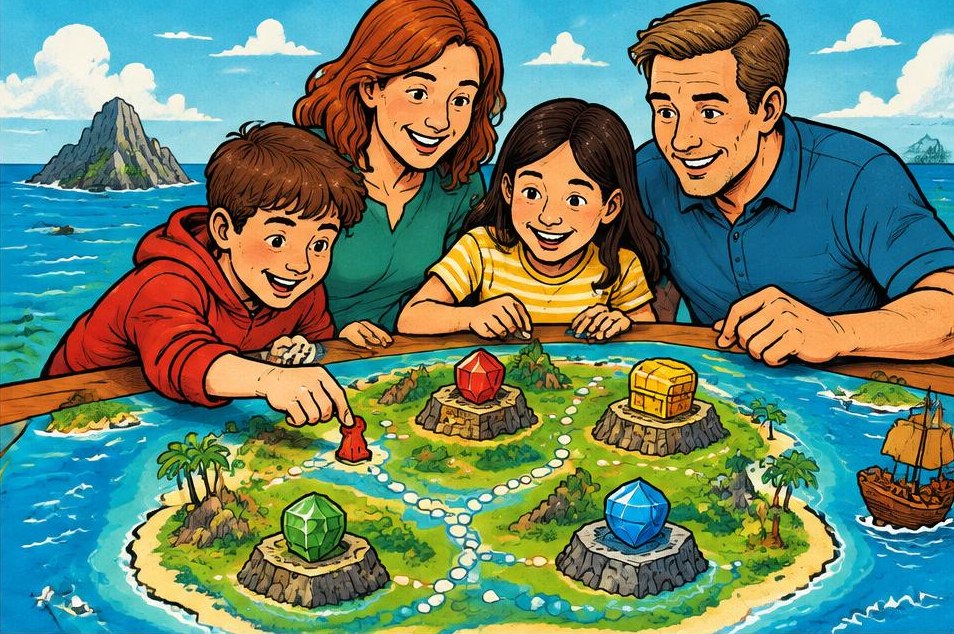
Forbidden Island is a concrete example of a shared objective: its publisher describes a team gathering four treasures and escaping a sinking island. The official specifications are 2–4 players, ages 10+ and around 30 minutes. Read the rules to decide whether that tension is what your group wants; those specifications alone do not establish suitability.
Choose the right competitive tone
If your group prefers competition, examine how players affect each other. Drafting a card someone wanted is different from destroying a position they spent an hour building. Both can be fun, but they ask for different expectations.
Sushi Go! is a publisher-described pick-and-pass game about collecting scoring combinations. It offers a useful way to investigate competitive drafting without assuming that every competitive game is a direct battle. Compare the kinds of decisions people enjoy, save a few candidates, and choose the one that matches the evening you actually plan to host.
Frequently asked questions
Are cooperative games good for people who dislike conflict?
They can be, because players share a goal. Check whether time pressure, losing together or unsolicited advice would still be frustrating.
Can a game be both cooperative and competitive?
Yes. Team, semi-cooperative and hidden-role formats can mix goals. Check the exact victory conditions before choosing one for a group expecting full cooperation.
Sources & further reading
Source notes identify the facts each reference supports. Buying frameworks, schedules and price examples are editorial guidance, not research findings or current offers.
- Gamewright: Forbidden Island
Publisher specifications: ages 10+, 2–4 players, approximately 30 minutes; cooperative play.
- Gamewright: Sushi Go!
Publisher specifications: ages 8+, 2–5 players, approximately 15 minutes; card drafting.
About this guide
Published by Meeple Matters, a board game discovery site. These AI-assisted guides synthesize publisher specifications, community scoring documentation and practical buying considerations. They are not hands-on reviews, original research or claims of professional testing. No individual reviewer credentials are implied.
Our current discovery catalog is limited, and store prices and Amazon ratings are estimates until verified data sources are connected. Check current specifications, stock and prices with the publisher and retailer. As an Amazon Associate, Meeple Matters earns from qualifying purchases through its shopping links.
Find your next table favorite
Good company. The right game. A night worth repeating.
Find a game