Key takeaways
- Treat player count and available time as your first checks.
- Complexity is a fit signal, not a measure of quality.
- A great rating or discount cannot fix the wrong audience.
Start with your actual table
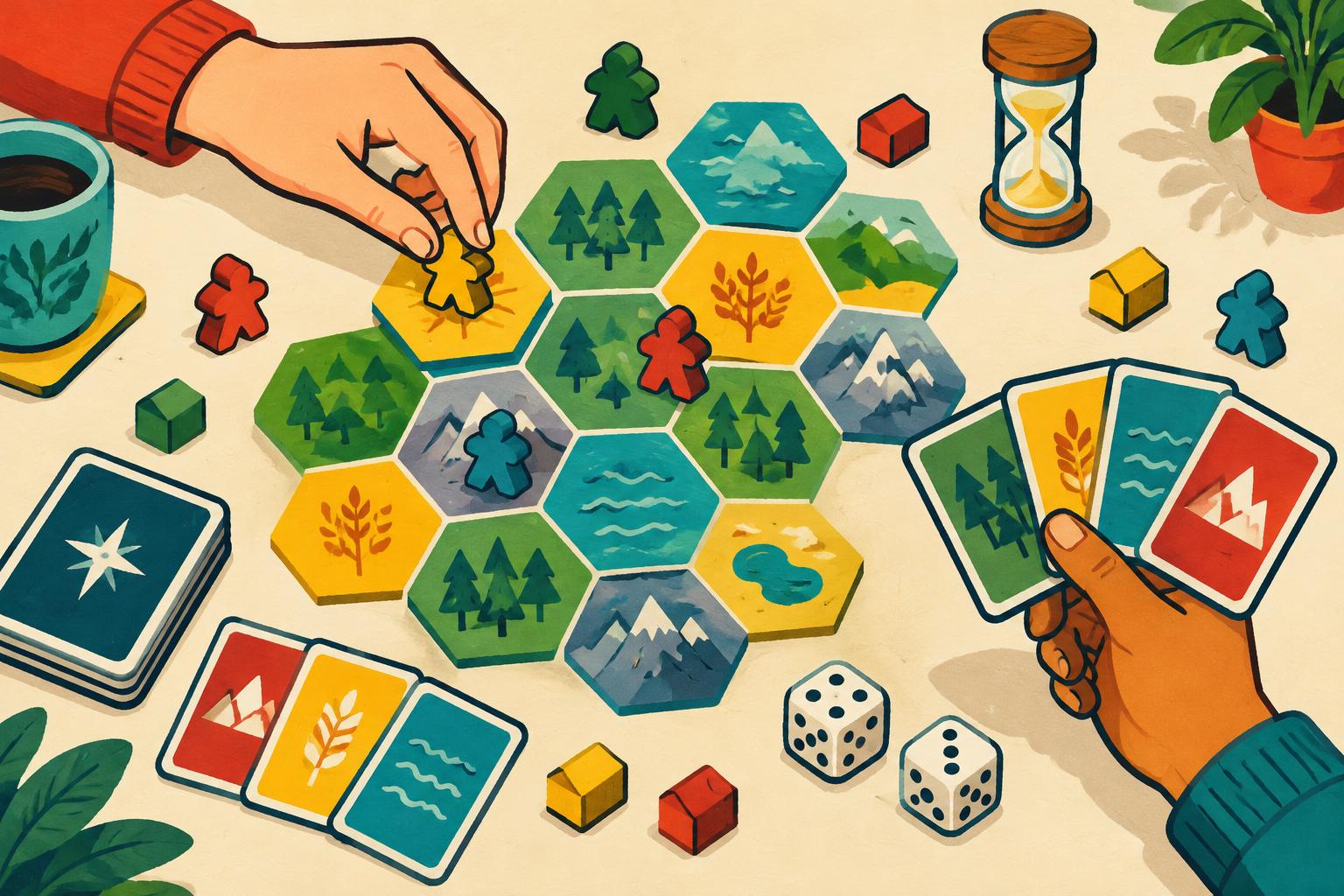
Before browsing boxes, write a one-sentence brief: ‘We usually have four players, including one newcomer, and about an hour after dinner.’ That sentence is more useful than ‘I want a really good game.’ It gives every recommendation a job to do.
Use the group that reliably shows up, not the largest gathering you host once a year. Check the exact edition's supported player count, then read comments or a rulebook to understand how it works at your number. Supporting four players is not the same as being your group's favorite experience at four.
- Who will play most often?
- How much time remains after setup and teaching?
- Does anyone need low reading demand, large print or non-color cues?
Match complexity to the evening
The community weight scale runs from 1 to 5 and reflects community opinions about complexity. Its own documentation notes that people interpret weight differently: rulebook size, planning and learning curve can all contribute. Use it to compare candidates, not to promise a precise teaching time.
Ask whether your group wants conversation, a puzzle, negotiation or sustained strategic thinking. A clever game can still be a poor purchase if its best moments require a level of concentration nobody wants on a Tuesday. Read a sample turn or watch a rules explanation before deciding.
Find your next table favorite
Good company. The right game. A night worth repeating.
Find a gameTurn your preferences into a buying brief
Separate practical requirements from preferences. Budget may be non-negotiable; a favorite theme may be flexible. Rating is evidence about other people's enthusiasm, while player count is evidence about whether you can even use the box. They should not automatically receive equal importance.
This is an illustrative brief, not a universal prescription. In Meeple Matters, factors closer to the top receive more weight, and near misses can still earn partial credit. Always inspect a candidate's specifications when a requirement is truly non-negotiable.
| Question | Example brief | What to check |
|---|---|---|
| Players | Usually four | Exact edition supports four |
| Time | One hour total | Teach, setup, play and cleanup |
| Rules | One newcomer | Rulebook and sample turn |
| Budget | Up to $40 delivered | Checkout total, not box price |
| Mood | Relaxed competition | Interaction and downtime |
Compare three finalists, not thirty
Once practical checks are satisfied, compare a small set of games on their trade-offs. One might be easier to teach, another more replayable for your group, and another cheaper. Give each a reason to exist on the shortlist; three near-identical purchases do not make the decision clearer.
Before paying, open the retailer listing and verify the title, edition, language, seller and total price. Meeple Matters currently uses a limited starter catalog and estimated store prices, so the displayed result is a starting point rather than a live inventory guarantee. Save an uncertain candidate for consideration instead of rushing the decision.
Frequently asked questions
Should I buy the highest-rated board game?
Not automatically. A highly rated game may require more players, time or rules learning than your group wants. Use ratings after checking fit.
What if no game matches every preference?
Relax an optional preference first, such as theme. Keep real constraints such as your player count, accessibility needs and total budget intact.
Sources & further reading
Source notes identify the facts each reference supports. Buying frameworks, schedules and price examples are editorial guidance, not research findings or current offers.
- Community source: Weight
Primary reference for the 1–5 community complexity scale and its limitations.
- Community source: Ratings
Primary reference for subjective user ratings and the average rating.
About this guide
Published by Meeple Matters, a board game discovery site. These AI-assisted guides synthesize publisher specifications, community scoring documentation and practical buying considerations. They are not hands-on reviews, original research or claims of professional testing. No individual reviewer credentials are implied.
Our current discovery catalog is limited, and store prices and Amazon ratings are estimates until verified data sources are connected. Check current specifications, stock and prices with the publisher and retailer. As an Amazon Associate, Meeple Matters earns from qualifying purchases through its shopping links.
Find your next table favorite
Good company. The right game. A night worth repeating.
Find a game