Key takeaways
- Buy for the group you have, not the one you imagine.
- Verify the exact edition and whether the product needs a base game.
- A shortlist creates a useful pause between excitement and checkout.
1–2. Chasing a rating and overlooking player count
The first mistake is assuming the highest community average is the best purchase for everyone. Ratings summarize subjective votes; they do not account for your group's schedule, reading confidence or tolerance for complexity. Use enthusiasm as supporting evidence after practical fit is established.
The second mistake is buying for a player count you rarely assemble. A game can be an excellent six-person experience and a poor investment for a household that nearly always plays at two. Confirm supported counts in the exact edition's rules and investigate comments about the count you will actually use.
3–4. Forgetting the teach and buying only for theme
A printed playtime may not include learning the rules, sorting components or cleaning up. Do not budget every available minute for the advertised session. Read a rules explanation and allow extra time for your first game; no single complexity number can provide an exact prediction.
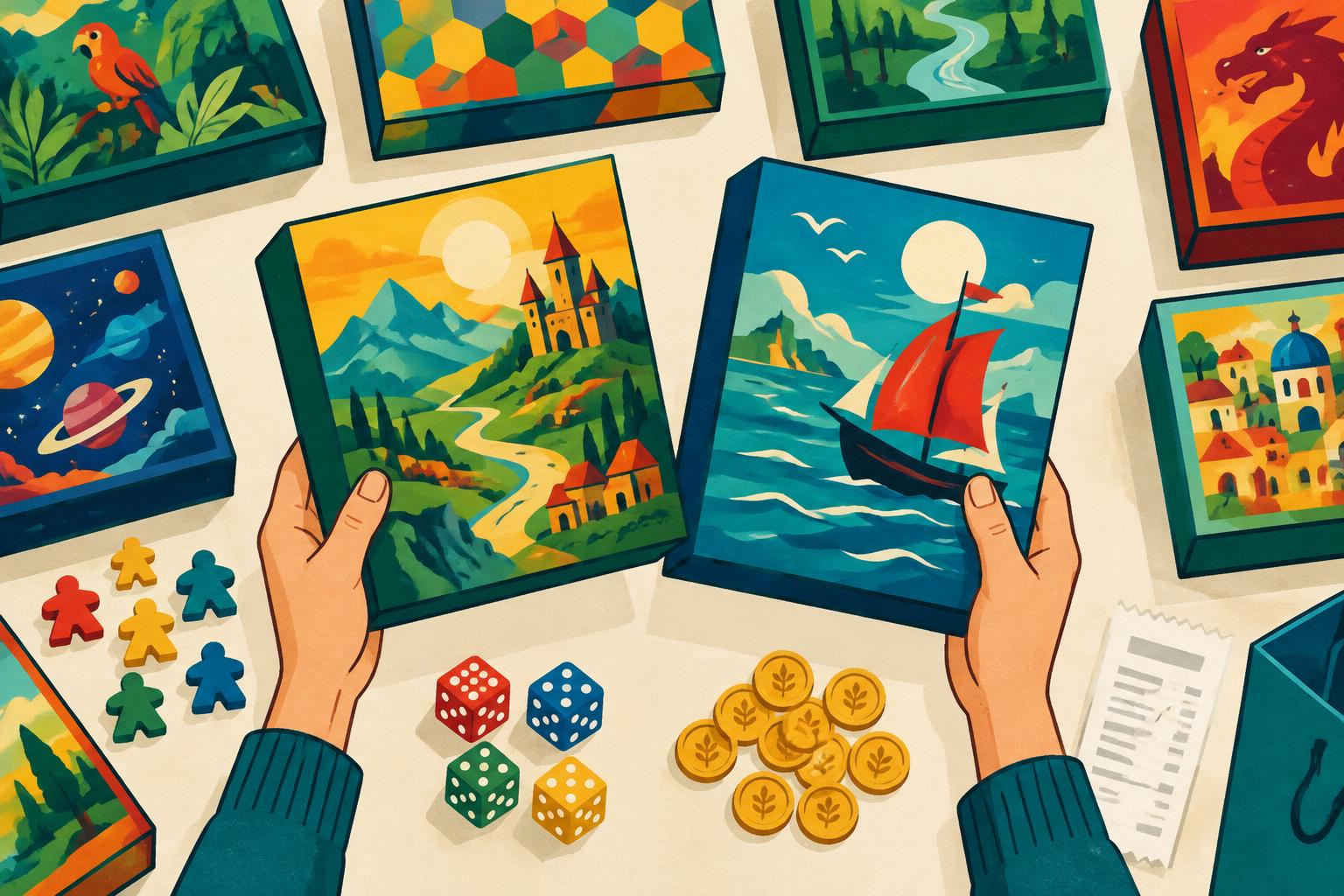
Theme is the fourth trap. A beautiful setting can draw you in, but the activities may not suit your group. If you dislike negotiation, a theme you love may not fix a game built around bargaining. Find out what players do on a normal turn before treating the box art as a recommendation.
A little less impulse. A little more play.
Keep the contenders together until the right choice feels clear.
My consideration list5–6. Trusting the discount and skipping product details
Compare delivered cost instead of the sale percentage alone. Shipping and a different reference price can make an apparently larger discount the worse offer. Resist adding unwanted items to reach a free-shipping threshold without calculating the final total.
Check whether the product is a base game, expansion, standalone sequel or accessory. Verify language, edition and condition too. A listing can use familiar artwork while selling something that does not work on its own or does not match the version your friends recommended. If the listing is unclear, ask the retailer before paying.
| Tempting signal | Missing question | Better check |
|---|---|---|
| High rating | Will we enjoy its demands? | Rules and group fit |
| Big player range | Does it work at our count? | Exact-count rules and comments |
| Short playtime | What about learning and setup? | Whole-session budget |
| Huge discount | Against what price? | Same-edition checkout comparison |
| Familiar artwork | What product is this? | Base game, edition and condition |
7. Buying without a role in your collection
The final mistake is buying a game without asking when it will get played. A close alternative to your favorite can be welcome, but so can a box that covers a missing group size or a shorter session. Name the role before buying; otherwise a sale can turn into a queue of games awaiting an ideal evening.
Rank your owned games and examine what you reliably choose. A purchase should serve your actual habits or an intentional experiment. You do not need to maximize novelty, value or collection size at every turn. You need a game someone is excited to bring to the table.
Create a pause with a consideration list
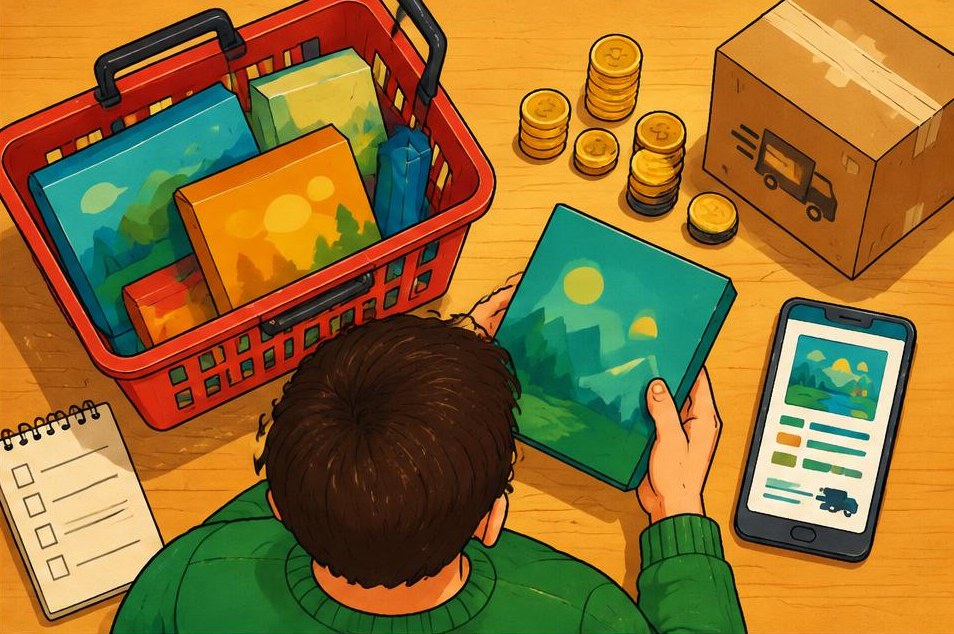
Save an interesting game before making a final decision. Compare a few candidates, open their rules, verify retailer listings and return when the initial excitement has settled. If you still want the same game and can name its first likely session, you have a more grounded reason to buy.
Meeple Matters separates games you are considering from discovery results and lets you sort them by the available factors. Its prices are currently estimates and its catalog is limited, so finish the product and price checks with the publisher and retailer rather than treating a displayed ranking as a checkout guarantee.
Frequently asked questions
Is buying an expansion a good way to improve a favorite?
It can be, but confirm compatibility, required base games and what the expansion changes. Extra rules or content may not solve the reason your group stopped playing.
Should I wait for every game to go on sale?
Not necessarily. Balance a verified price with when you will use the game and your budget. A smaller discount on a well-chosen game can be better value than a deep discount on an unwanted one.
Sources & further reading
Source notes identify the facts each reference supports. Buying frameworks, schedules and price examples are editorial guidance, not research findings or current offers.
- Community source: Ratings
Primary reference for subjective user ratings and the average rating.
- Community source: Weight
Primary reference for the 1–5 community complexity scale and its limitations.
- Community source: Board Game Gift Guide
Community examples organized by audience; historical prices and availability are not used here.
About this guide
Published by Meeple Matters, a board game discovery site. These AI-assisted guides synthesize publisher specifications, community scoring documentation and practical buying considerations. They are not hands-on reviews, original research or claims of professional testing. No individual reviewer credentials are implied.
Our current discovery catalog is limited, and store prices and Amazon ratings are estimates until verified data sources are connected. Check current specifications, stock and prices with the publisher and retailer. As an Amazon Associate, Meeple Matters earns from qualifying purchases through its shopping links.
A little less impulse. A little more play.
Keep the contenders together until the right choice feels clear.
My consideration list