Key takeaways
- A 2–6 player label alone does not describe the two-player experience.
- Match both players' appetite for conflict and complexity.
- A dedicated two-player game is useful, but not automatically best.
Check the experience at exactly two
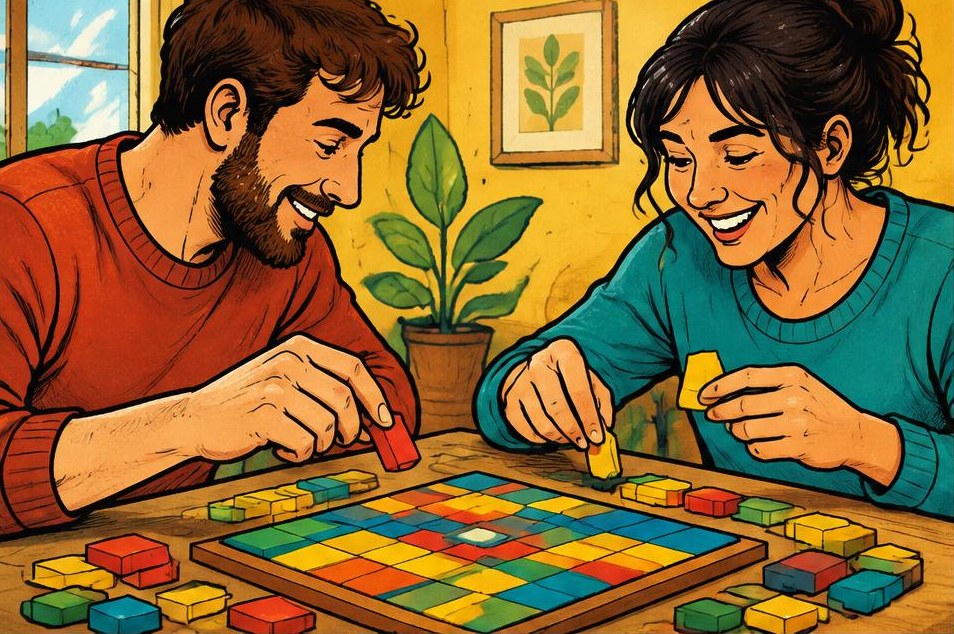
A game designed for multiple group sizes may change its rules when only two people play. You might add a dummy hand, reduce the board or use a special drafting procedure. These adjustments are not inherently bad, but you should know what they involve before spending money.
Look for a two-player section in the rulebook and comments specifically about that count. Reviews from a lively five-person session may not answer your question. Dedicated two-player games remove uncertainty about the intended audience; scalable games can offer flexibility when friends visit.
Agree on the kind of interaction
The important question is not just ‘Do we like strategy?’ Ask whether you enjoy blocking each other's plans, building separately and comparing scores, or solving a shared challenge. At two, every aggressive move is directed at the same opponent, so the emotional tone can feel different from a larger gathering.
Skill differences also matter. If one player loves exploring systems and the other wants a relaxed evening, start with a game both want to learn rather than treating one person as a permanent teacher. A modest rules load with interesting choices may be a better shared investment than an ambitious box one partner tolerates.
| Your pair wants | Look for | Ask before buying |
|---|---|---|
| Head-to-head tension | Direct competition | Is blocking enjoyable to both? |
| Relaxed parallel play | Separate puzzles or building | Does either player want more interaction? |
| A shared challenge | Cooperative rules | Can both contribute independently? |
| Quick repeat sessions | Short setup and reset | How much time is spent preparing? |
Find your next table favorite
Good company. The right game. A night worth repeating.
Find a gameCompare formats rather than assuming a winner
For a scalable cooperative example, Forbidden Island officially supports 2–4 players, ages 10+ and an approximately 30-minute playtime. At two, investigate how shared discussion feels to your pair. A common goal does not prevent one person from dominating the plan.
Sushi Go! officially supports 2–5 players, ages 8+ and approximately 15 minutes. Its rules deal ten cards per player at two. That shows why an exact-count rule check is useful: you can understand the setup rather than relying on a vague ‘works for couples’ claim. Neither example is a claim that it is the best two-player purchase.
Build a two-person shortlist
Write down your available time, a delivered-price limit and one deal-breaker each. Compare two or three games against that brief. If possible, try a borrowed copy or a store demonstration. Watch for whether both players want another round, not simply who won.
In Meeple Matters, put Number of Players near the top and inspect results for games that support exactly your pair. Add time and complexity preferences next. The matching system can award partial credit to close misses, so confirm the actual minimum and maximum on any finalist before buying.
Frequently asked questions
Are dedicated two-player games always better?
No. They are designed for that count, which is useful, but a scalable game may suit your preferences better. Read the exact two-player rules.
What if one of us dislikes losing?
Consider cooperative play or less confrontational competition, and agree on a practice game. Cooperation still needs space for both players to make decisions.
Sources & further reading
Source notes identify the facts each reference supports. Buying frameworks, schedules and price examples are editorial guidance, not research findings or current offers.
- Gamewright: Forbidden Island
Publisher specifications: ages 10+, 2–4 players, approximately 30 minutes; cooperative play.
- Gamewright: Sushi Go!
Publisher specifications: ages 8+, 2–5 players, approximately 15 minutes; card drafting.
- Sushi Go! official rules
Primary reference for dealing ten cards per player in the two-player setup.
About this guide
Published by Meeple Matters, a board game discovery site. These AI-assisted guides synthesize publisher specifications, community scoring documentation and practical buying considerations. They are not hands-on reviews, original research or claims of professional testing. No individual reviewer credentials are implied.
Our current discovery catalog is limited, and store prices and Amazon ratings are estimates until verified data sources are connected. Check current specifications, stock and prices with the publisher and retailer. As an Amazon Associate, Meeple Matters earns from qualifying purchases through its shopping links.
Find your next table favorite
Good company. The right game. A night worth repeating.
Find a game