Key takeaways
- Azul centers on tile selection and pattern building; Sagrada drafts colored dice.
- Shared drafting means neither puzzle is completely isolated.
- Sagrada’s current remastered listing differs from older editions; check compatibility.
Choose the decisions, not just the artwork
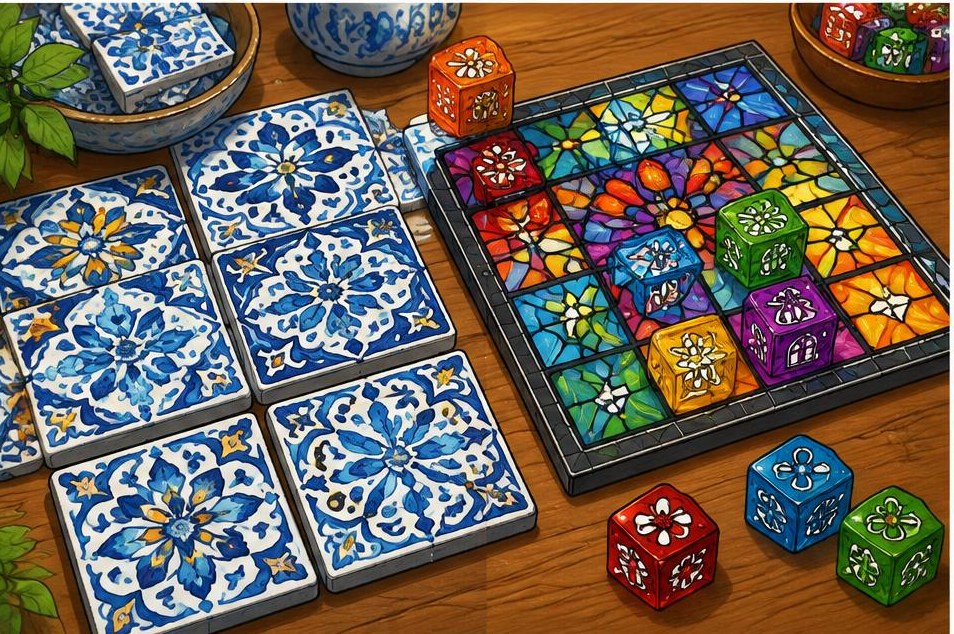
Azul asks you to choose tiles from a shared supply and commit them to pattern-building plans. The attraction is deciding which colors to collect and when to take them, while avoiding a choice that leaves you with unwanted tiles. Read the original base-game rules rather than assuming every Azul-branded box follows the same structure.
Sagrada asks you to draft dice for a stained-glass window. Its publisher describes color and value restrictions on the window, with matching dice prohibited side by side. You are solving a placement puzzle that changes as available dice and objectives interact. That constraint-based decision is the strongest reason to investigate it.
| Consideration | Azul | Sagrada |
|---|---|---|
| Material drafted | Patterned tiles | Colored dice |
| Main planning question | Which pattern can I complete? | Where can this die legally fit? |
| Risk to inspect | Surplus-tile penalties | Restricted placements |
| Shopping check | Original versus other Azul titles | Original versus remastered edition |
Shared drafting creates interaction
A personal board does not mean opponents are irrelevant. Taking something from a shared supply removes it from the other players’ choices. Watch a sample round to decide whether that indirect competition gives your group the right amount of interaction. It can be satisfying for a puzzle-oriented table without turning into negotiation.
Do not describe either game as conflict-free merely because there are attractive individual displays. Choosing an item another player needs can feel pointed at two players. Ask whether that tension is enjoyable to both people rather than using the artwork as evidence of a gentle game night.
Find your next table favorite
Good company. The right game. A night worth repeating.
Find a gameSagrada edition checks are especially important
Floodgate’s current Sagrada page lists one to four players, ages ten and up, and thirty to forty-five minutes. It also identifies remastered and deluxe options. Older copies and expansion listings can appear alongside newer products in retailer search results, so the name alone is not enough to identify what you are buying.
If you already own Sagrada material, consult the publisher’s compatibility information before adding a remastered box or expansion. Premium components are a separate decision from the core placement puzzle. Avoid spending extra because a deluxe label sounds like a rules upgrade when your real priority is simply trying the game.
Which should you shortlist?
Investigate Azul first if pattern completion and a tightly shared tile supply sound appealing. Investigate Sagrada first if you enjoy fitting pieces into restrictive spaces and balancing several scoring demands. Those are editorial fit suggestions, not hands-on review verdicts or a universal ranking.
Read the relevant rulebook and compare the complete English-language base game at checkout. A good price on an expansion or a different title in the same family is not a price for the experience described here. Keep the comparison tied to the exact box you will play.
Compare the games
As an Amazon Associate, Meeple Matters earns from qualifying purchases. These links open retailer searches; confirm the exact base game, edition, seller and delivered price.
Azul
Tile drafting with pattern planning and consequences for surplus tiles.
Sagrada
Dice drafting constrained by a personal window pattern.
Frequently asked questions
Are Azul and Sagrada the same kind of game?
They both use drafting and personal displays, but Azul drafts tiles for patterns while Sagrada drafts dice with color and number placement restrictions.
Can I ignore Sagrada edition differences?
No. Check the current publisher guidance for the base edition and any expansions you plan to combine.
Which is better for a quiet puzzle evening?
Both deserve investigation. Decide whether tile-pattern planning or restricted dice placement sounds more enjoyable.
Sources & further reading
Source notes identify the facts each reference supports. Buying frameworks, schedules and price examples are editorial guidance, not research findings or current offers.
- Asmodee: Azul
Publisher/distributor listing and rulebook for the original tile-drafting base game.
- Floodgate Games: Sagrada
Current remastered listing: 1–4 players, ages 10+, 30–45 minutes; dice placement and edition differences.
About this guide
Published by Meeple Matters, a board game discovery site. These AI-assisted guides synthesize publisher specifications, community scoring documentation and practical buying considerations. They are not hands-on reviews, original research or claims of professional testing. No individual reviewer credentials are implied.
Our current discovery catalog is limited, and store prices and Amazon ratings are estimates until verified data sources are connected. Check current specifications, stock and prices with the publisher and retailer. As an Amazon Associate, Meeple Matters earns from qualifying purchases through its shopping links.
Find your next table favorite
Good company. The right game. A night worth repeating.
Find a game